
Albino Thrasher: An Educational Overview of a Psilocybe cubensis Variety
Introduction
Albino Thrasher is a named variety associated with the species Psilocybe cubensis, a mushroom-forming fungus that has attracted attention in mycology because of its distinctive appearance and naturally occurring compounds. Like many cultivated lineages of P. cubensis, Albino Thrasher is recognized primarily within mycological communities rather than as a separate scientific species.
This article is provided for educational purposes only. It explores the taxonomy, physical characteristics, biology, ecological role, and scientific interest surrounding Albino Thrasher. It does not provide guidance on cultivation, consumption, or activities that may be prohibited by law.
Taxonomy
Albino Thrasher belongs to the following scientific classification:
- Kingdom: Fungi
- Division: Basidiomycota
- Class: Agaricomycetes
- Order: Agaricales
- Family: Hymenogastraceae
- Genus: Psilocybe
- Species: Psilocybe cubensis
Although commonly referred to as a “strain” or “variety,” Albino Thrasher is not recognized as a distinct species in scientific taxonomy. Instead, it represents a cultivated lineage with inherited physical traits.
Physical Characteristics
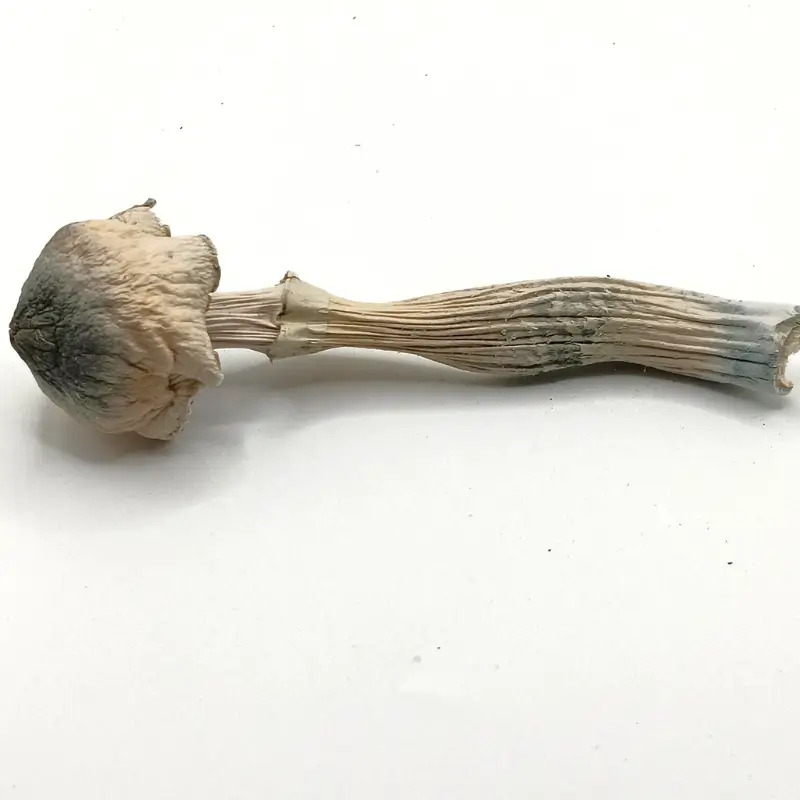
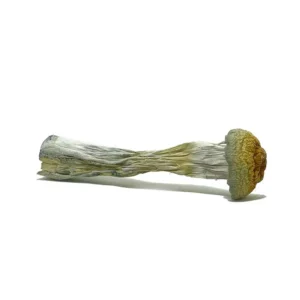
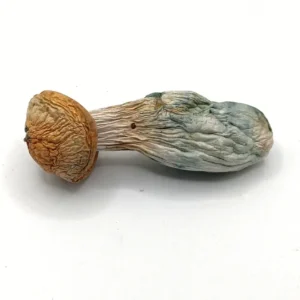
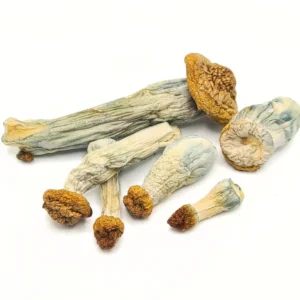
Albino Thrasher is noted for its pale or nearly white appearance, a characteristic often described as “albino” in cultivation communities. In many cases, the coloration is more accurately described as reduced pigmentation rather than true albinism.
Typical features include:
- Pale white to cream-colored caps
- Thick, sturdy stems
- Light-colored gills that darken as spores mature
- Blue bruising when the tissue is damaged
- Dense fruiting bodies
Individual mushrooms may vary in size, shape, and color depending on genetics and environmental conditions.
Blue Bruising
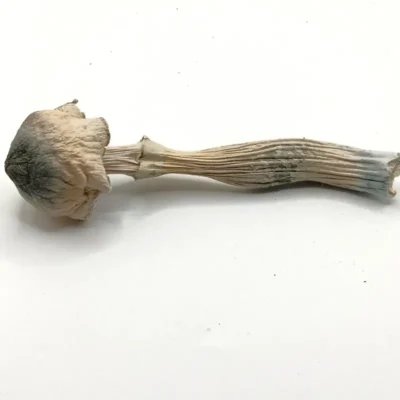
Like many members of the genus Psilocybe, Albino Thrasher displays blue bruising when handled or physically damaged. This blue coloration results from oxidation reactions involving naturally occurring compounds within the mushroom tissue.
Researchers continue to study the chemistry behind this process. Current evidence indicates that bruising intensity should not be used as a reliable indicator of the concentration of specific compounds.
Ecology
In nature, Psilocybe cubensis is found in warm, humid environments where organic material is abundant. Fungi perform an important ecological function by decomposing plant material and recycling nutrients within ecosystems.
Through their underground mycelial networks, fungi contribute to soil health, nutrient cycling, and the decomposition of organic matter, supporting broader ecological processes.
Life Cycle
Like other mushroom-forming fungi, the life cycle of Psilocybe cubensis begins with microscopic spores.
When conditions are favorable, spores germinate and develop into thread-like hyphae. These hyphae combine to form a mycelial network that absorbs nutrients from its environment. Under suitable environmental conditions, the mycelium produces fruiting bodies that release spores, completing the reproductive cycle.
Scientific Interest
Scientists have increasingly studied psilocybin-producing fungi because of their biology, genetics, and chemistry. Research involving compounds such as psilocybin and psilocin is conducted under controlled laboratory and clinical conditions.
Current areas of investigation include:
- Fungal genetics
- Secondary metabolite production
- Evolution of the genus Psilocybe
- Ecology and biodiversity
- Potential medical applications of psilocybin under regulated clinical research
These studies are performed within established ethical and legal frameworks.
Genetic Diversity
Named varieties such as Albino Thrasher illustrate the genetic diversity that can exist within a single fungal species. Differences in pigmentation, morphology, and growth characteristics arise from inherited genetic variation.
Studying these variations helps researchers better understand fungal evolution, inheritance, and adaptation while contributing to broader knowledge of biodiversity.
Common Misconceptions
Several misconceptions surround Albino Thrasher and similar named varieties.
One common misunderstanding is that all pale mushrooms are true albinos. In many cases, the reduced coloration results from partial pigment expression rather than complete absence of pigment.
Another misconception is that named varieties represent separate species. Scientific classification places Albino Thrasher within Psilocybe cubensis, alongside many other cultivated lineages.
Legal Considerations
The legal status of psilocybin-containing mushrooms differs significantly among countries and regions. Some jurisdictions prohibit possession and cultivation, while others allow limited medical research or have adopted different regulatory approaches.
Anyone studying these fungi should be aware of the laws that apply in their jurisdiction.
Educational Importance
Albino Thrasher provides an example of how genetic diversity influences the appearance of fungi without changing their species classification. Studying such varieties contributes to understanding fungal biology, taxonomy, ecology, and evolution.
As interest in fungal science continues to grow, researchers are expanding knowledge about the role of fungi in ecosystems, biotechnology, and medicine.
Conclusion
Albino Thrasher is a cultivated variety within the species Psilocybe cubensis that is recognized for its pale appearance and distinctive morphological traits. From an educational perspective, it offers an opportunity to explore fungal taxonomy, genetics, ecology, and ongoing scientific research into the biology of Psilocybe species.
This article is intended solely for educational purposes and encourages readers to consult peer-reviewed scientific literature and reputable academic sources for further information.
| weight | 14g, 28g, 7g |
|---|
Be the first to review “Albino Thrasher”
Related products
Raw Mushrooms
Raw Mushrooms
Raw Mushrooms
Raw Mushrooms
Raw Mushrooms
Raw Mushrooms
Raw Mushrooms
Raw Mushrooms
3 reviews for Albino Thrasher
There are no reviews yet.