
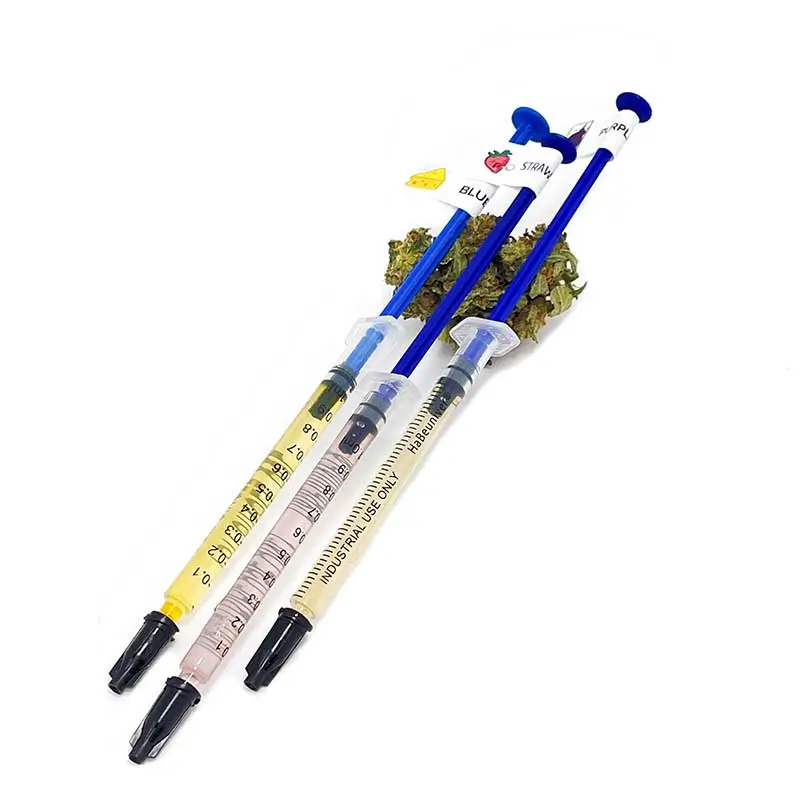
Flavoured Delta 8 THC Syringe – Buy Online Terpene-Rich Fruit Extracts
€10.00
Flavoured Delta 8 THC Syringe features fruit-based terpenes and over 90% THC. Dab, vape, or ingest with ease. Buy online now from Shrooms Direct.
Flavoured Delta-8 THC Syringe – Terpene-Rich Fruit Extracts
Flavoured Delta-8 THC Syringes are multi-use glass applicators pre-filled with high-purity Delta-8 Tetrahydrocannabinol (\Delta^8-THC) distillate, infused with botanical or cannabis-derived terpenes for specific flavor profiles (e.g., fruit extracts).
Unlike medical syringes equipped with hypodermic needles, these products are blunt-tip glass applicators designed exclusively for precise volumetric dispensing of viscous oil—whether for dabbing, refilling vape cartridges, formulating homemade edibles, or sublingual application.
1. Active Compound & Pharmacokinetics
Delta-8 THC is a naturally occurring minor cannabinoid found in trace amounts in Cannabis sativa. Commercial $\Delta^8$-THC is typically synthesized via acid-catalyzed isomerization of hemp-derived CBD (cannabidiol).
                   [Delta-8 THC Receptor Dynamics]

  Delta-8 THC (CB1 Partial Agonist) ──► Lower binding affinity than Delta-9 THC
                                      │
                                      ├── ~50–65% as psychoactive as Delta-9
                                      ├── Reduced incidence of acute paranoia/anxiety
                                      └── Pronounced body relaxation & mild euphoria
-
Pharmacological Profile: Like $\Delta^9$-THC, Delta-8 binds to central $\text{CB}_1$ receptors in the nervous system and $\text{CB}_2$ receptors in the immune system. However, due to a shift in its double bond from the 9th to the 8th carbon chain position, it exhibits lower potency and binding affinity.
-
Onward Metabolism: When ingested orally (e.g., in edibles), Delta-8 is metabolized by the liver into 11-hydroxy-$\Delta^8$-THC, a potent metabolite that produces robust, long-lasting systemic effects similar to oral $\Delta^9$-THC.
2. Technical Specifications & Terpene Infusion
The glass syringe format provides heat resistance, chemical stability, and precise volume control for high-viscosity distillates.
| Specification | Metric / Characteristic |
| Active Cannabinoid Concentration | Typically 85%–95% Delta-8 THC Distillate |
| Terpene Profile | 3%–7% Terpene Blend (Botanical or Cannabis-Derived Fruit Extracts) |
| Applicator Material | Borosilicate Glass body with Luer-lock tip and stainless steel/silicone plunger |
| Primary Delivery Methods | Inhalation (Dabbing/Vaping), Oral/Edible Formulations, Sublingual |
3. Usage & Application Protocols
Because pure $\Delta^8$-THC distillate is extremely dense and sticky at room temperature, proper handling technique is necessary for accurate dosing:
-
Warming the Applicator: To reduce viscosity, warm the sealed glass syringe in a warm water bath ($40^\circ\text{C}$–$50^\circ\text{C}$) or wrap it in a heating pad for 1–2 minutes. Never expose the syringe to open flames.
-
Volumetric Measurement: Use the graduated milligram/milliliter markings on the borosilicate glass barrel to meter out exact doses (e.g., 0.05 mL to 0.1 mL).
-
Application Routes:
-
Dabbing / Vaporization: Dispense a small bead directly onto a heated quartz banger or into a compatible ceramic vape pod.
-
Edible Infusion: Mix warmed distillate into fats (such as butter or MCT oil) to optimize cannabinoid bioavailability during cooking.
-
4. Quality Control & Safety Standards
Because Delta-8 distillate is chemically converted from CBD isolate using reagents and catalysts, stringent third-party testing is essential:
-
Residual Solvents & Acids: Full-panel Certificate of Analysis (COA) testing verifies the complete removal of processing reagents, residual solvents (e.g., heptane, toluene), and heavy metals.
-
Terpene Safety: High-quality formulations use natural botanical terpenes. Excessive terpene concentration (>10%) can cause respiratory irritation during vapor inhalation.
-
Dosing Caution: Due to the high potency of concentrated distillate, first-time users should start with a rice-grain-sized amount (~10–15 mg) to gauge individual tolerance
Delta-8 THC and Terpene-Rich Cannabis Extracts: Chemistry, Pharmacology, and Scientific Research
Meta Title
Delta-8 THC Explained: Chemistry, Terpenes, Pharmacology & Scientific Research
Meta Description
Learn about Delta-8 THC and terpene-rich cannabis extracts from an educational perspective. Explore cannabinoid chemistry, terpene science, pharmacology, laboratory testing, and current research.
Introduction
Delta-8 tetrahydrocannabinol (Delta-8 THC) is a naturally occurring cannabinoid found in the Cannabis sativa plant in relatively small amounts. It has become a topic of interest in analytical chemistry, pharmacology, botany, toxicology, and cannabis research. Scientists are investigating its chemical structure, interactions with the body’s endocannabinoid system, metabolism, and methods for laboratory analysis.
Many cannabis extracts also contain terpenes, aromatic compounds that contribute to the characteristic scent of cannabis and numerous other plants. Researchers study terpenes for their botanical roles, chemical properties, and potential interactions with cannabinoids.
This article is intended solely for educational purposes and summarizes current scientific knowledge without promoting any commercial product.
What Is Delta-8 THC?
Delta-8 THC is one of more than one hundred cannabinoids identified in cannabis. It is structurally related to Delta-9 THC, differing only in the position of one double bond within the molecule. Although the chemical difference is small, researchers continue studying how it may influence biological activity and pharmacological properties.
Areas of scientific interest include:
- Cannabinoid chemistry
- Endocannabinoid signaling
- Plant biochemistry
- Pharmacology
- Toxicology
- Analytical chemistry
- Public health
Understanding Terpenes
Terpenes are naturally occurring compounds produced by many plants, including cannabis, citrus fruits, lavender, pine trees, and herbs.
Common terpenes studied in cannabis include:
- Myrcene
- Limonene
- Pinene
- Linalool
- Caryophyllene
- Humulene
- Terpinolene
Researchers examine how these compounds contribute to plant ecology, aroma, and chemical composition.
The Endocannabinoid System
Scientists study cannabinoids because they interact with the endocannabinoid system (ECS), a biological signaling network involved in regulating numerous physiological processes.
Research focuses on:
- CB1 receptors
- CB2 receptors
- Endogenous cannabinoids
- Signal transmission
- Receptor pharmacology
- Cellular communication
Many aspects of cannabinoid biology remain active areas of investigation.
Laboratory Analysis
Accurate identification of cannabinoids and terpenes requires laboratory testing.
Common analytical methods include:
Gas Chromatography–Mass Spectrometry (GC-MS)
Used to identify volatile compounds, including many terpenes.
Liquid Chromatography–Mass Spectrometry (LC-MS)
Widely used to identify and quantify cannabinoids in plant materials and extracts.
High-Performance Liquid Chromatography (HPLC)
Frequently used to measure cannabinoid concentrations without high-temperature processing.
Nuclear Magnetic Resonance (NMR)
Provides detailed structural confirmation for research and quality analysis.
Quality Assurance
Scientific laboratories evaluate cannabis-derived materials using procedures such as:
- Cannabinoid profiling
- Terpene analysis
- Identity confirmation
- Purity assessment
- Stability testing
- Quality control
These methods support research, product quality evaluation, and regulatory compliance where applicable.
Current Scientific Research
Researchers continue exploring:
- Cannabinoid chemistry
- Plant biology
- Analytical chemistry
- Pharmacology
- Toxicology
- Neuroscience
- Medicinal chemistry
- Public health
As research expands, scientists aim to improve understanding of cannabinoid composition, biological activity, and laboratory testing methods.
Frequently Asked Questions
What is Delta-8 THC?
Delta-8 THC is a naturally occurring cannabinoid found in cannabis that is structurally similar to Delta-9 THC and is studied in pharmacology, chemistry, and plant science.
What are terpenes?
Terpenes are aromatic compounds produced by many plants. In cannabis, they contribute to aroma and are the subject of ongoing botanical and chemical research.
How are cannabinoids identified?
Researchers use analytical techniques such as GC-MS, LC-MS, HPLC, and NMR to identify and characterize cannabinoids and related compounds.
Why is laboratory testing important?
Laboratory testing helps accurately identify chemical composition, supports scientific research, and contributes to quality assurance and public health.
Educational SEO Keywords
Delta-8 THC education, cannabinoid chemistry, terpenes, cannabis terpenes, endocannabinoid system, analytical chemistry, HPLC, GC-MS, LC-MS, NMR spectroscopy, cannabis research, pharmacology, toxicology, plant biology, medicinal chemistry, laboratory testing, public health education, scientific research, cannabinoid analysis, evidence-based education
Conclusion
Delta-8 THC and terpene-rich cannabis extracts are important subjects of study in chemistry, pharmacology, botany, and public health. Ongoing research continues to improve understanding of cannabinoid chemistry, terpene composition, laboratory analysis, and plant biology. Educational discussions are most valuable when grounded in peer-reviewed scientific evidence and responsible science communication.
| Amount | Banana Kush, Banana Mimosa, birthday cake, Blue Cheese, Blue Dream, Blue Razz, Blue Skittles, blueberry afgoo, Blueberry Donut, Bubblegum OG, Cherry Pie, Cookies, Durban Poison, Forbidden Fruit, Gelato Cake, Gorilla Glue #4, Grape Ape, Grapefruit Haze, Headband, Lemon Diesel, Lemon Sour Diesel, Orange Soda, Pineapple OG, Platinum OG, Purple Headband, Purple Punch, Sour Diesel, Sour Tangie, Sour Zklittles, Strawberry Banana, Strawberry Cough, Strawberry Shortcake, Sunset Sherbet, Tahoe OG, Watermelon Mojito, Yoda OG |
|---|
Reviews
There are no reviews yet.