
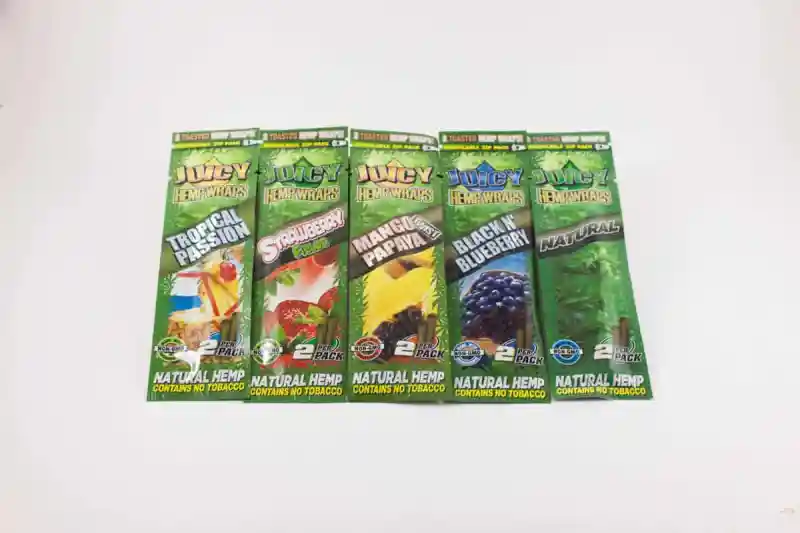
Juicy Jay’s Hemp Wraps
Juicy Jay’s Hemp Wraps are tobacco-free, nicotine-free rolling papers crafted from 100% natural, toasted pure hemp. Designed as a clean, herbal alternative to traditional tobacco-based blunt wraps, they utilize a proprietary triple-dipped flavoring system (Triple-Dipped Flavor System) to provide consistent, aromatic flavor profiles that complement natural herbs.
1. Material Composition & Manufacturing Standards
Traditional blunt wraps are manufactured from reconstituted tobacco leaf, carrying inherent risks associated with residual nicotine and heavy combustion byproducts. Juicy Jay’s Hemp Wraps replace tobacco entirely with processed natural hemp fiber.
                    [Material & Structural Comparison]

  Traditional Tobacco Wraps     │  Juicy Jay's Pure Hemp Wraps
  ──────────────────────────    │  ──────────────────────────────
  • Contains Nicotine           │  • 100% Nicotine-Free
  • Reconstituted Tobacco Leaf  │  • 100% Natural Toasted Hemp
  • Harsh Combustion Profile    │  • Smooth, Slow-Burning Profile
  • Synthetic Chemical Binders  │  • Sealed Resealable Pouch Preservative
-
Pure Toasted Hemp: Made without synthetic binders, chemical bleaches, or tobacco additives, yielding a cleaner burn profile with minimal ash residue.
-
Resealable Foil Packaging: Each pack contains two wraps sealed in a zip-lock foil pouch equipped with a moisture-lock seal to prevent the hemp material from drying out, cracking, or losing elasticity.
-
Triple-Dipped Flavor System: Flavoring agents are applied through a specialized three-stage saturation process rather than surface spraying, ensuring even flavor distribution throughout the entirety of the burn.
2. Technical Comparison: Hemp Wraps vs. Tobacco Blunts
For individuals seeking harm-reduction strategies in smoking media, switching from tobacco leaf to pure hemp wraps alters both physical handling and combustion dynamics.
| Feature / Metric | Juicy Jay’s Hemp Wraps | Traditional Tobacco Blunt Wraps |
| Active Additives | 0% Nicotine / 0% Tobacco | Variable Nicotine Content (Habit-Forming) |
| Material Flexibility | Moist, pliable, requires firm moistening to seal | Dry/brittle, prone to splitting during prep |
| Burn Rate | Slow, uniform combustion | Moderate to slow, dependent on tobacco thickness |
| Combustion Harmlessness | Free of tobacco-specific nitrosamines (TSNs) | Contains tobacco combustion tar and alkaloid byproducts |
3. Preparation & Rolling Dynamics
Because natural hemp fiber lacks the natural sticky resins and tobacco adhesives of conventional blunt leaves, handling requires specific techniques to achieve an optimal seal:
-
Moisture Control: Natural hemp wraps require controlled hydration. The gumless edge depends on thorough, uniform moistening across the sealing fold rather than a quick lick.
-
Firm Packing Structure: Because the wraps are flexible and soft, packing the herb evenly prevents structural “kinks” or air pockets that cause uneven burning (boating/canoeing).
-
Curing the Seal: Once rolled, running a light source (such as a lighter flame) roughly 1–2 inches beneath the seal for a few seconds warms and sets the fold, ensuring the wrap remains intact throughout use.
4. Health & Harm-Reduction Context
-
Elimination of Nicotine Dependency: By utilizing 100% toasted hemp, these wraps avoid introducing nicotine into the bloodstream—preventing unwanted heart rate elevation, elevated blood pressure, and chemical dependence associated with tobacco leaves.
-
Combustion Awareness: While natural hemp wraps eliminate tobacco-specific toxins, all plant matter combustion produces tar, carbon monoxide, and particulate matter. For maximum respiratory harm reduction, non-combustion methods (such as dry herb vaporization or sublingual tinctures) remain the safer alternative.
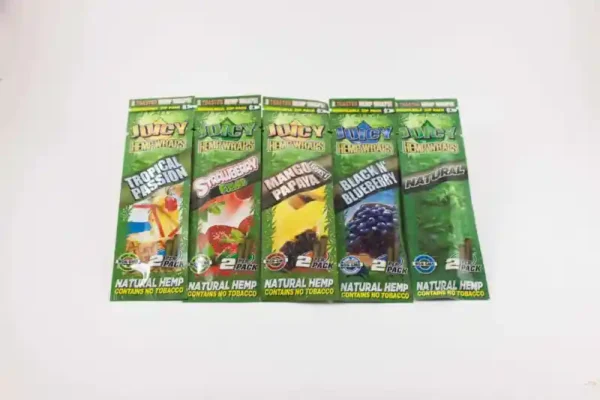
Wanna smoke the natural way with a pure hemp wrap? Now you can with Juicy Jay’s Hemp Wraps! Designed by the same group that brings you Juicy Jay’s Papers, hemp wraps make rolling a quick smoke simple and satisfying. These delicious wraps come in 3 great flavors with two wraps in each pack. Try a smoke with one of these satisfying wraps today and you’ll never go back!
Available in multiple Flavors (2 wraps in each pack!)
Hemp Wraps: Materials, Manufacturing, Uses, and Consumer Education
Meta Title
Hemp Wraps Explained: Materials, Manufacturing, Sustainability & Consumer Education
Meta Description
Learn about hemp wraps from an educational perspective. Explore how hemp wraps are made, their materials, manufacturing process, environmental considerations, regulations, and consumer information.
Introduction
Hemp wraps are wrapping materials manufactured primarily from industrial hemp fibers and related plant-based ingredients. They are studied in fields such as agricultural science, materials engineering, environmental sustainability, manufacturing, and consumer product regulation. Unlike traditional paper products, hemp-based wraps are derived from the Cannabis sativa plant varieties cultivated for industrial hemp, which contain only trace amounts of tetrahydrocannabinol (THC) as defined by applicable laws.
This article provides educational information about hemp wraps, including their production, composition, quality standards, sustainability considerations, and regulatory topics. It is intended for informational purposes only and does not promote any particular brand or product.
What Are Hemp Wraps?
Hemp wraps are thin, flexible sheets produced from processed hemp fibers and other plant-derived materials. Manufacturers may use different blends and production methods depending on the desired texture, strength, flexibility, and shelf stability.
Researchers study hemp products in relation to:
- Agricultural science
- Sustainable materials
- Manufacturing technology
- Consumer product safety
- Environmental science
- Plant biology
How Hemp Is Processed
Industrial hemp undergoes several stages before it becomes a finished material.
Typical manufacturing steps include:
- Harvesting hemp plants
- Fiber separation
- Cleaning and processing
- Blending with plant-based ingredients
- Sheet formation
- Drying and quality inspection
- Packaging
Manufacturing methods vary between producers and jurisdictions.
Material Characteristics
Scientists and manufacturers evaluate characteristics such as:
- Fiber strength
- Flexibility
- Moisture resistance
- Thickness
- Texture
- Storage stability
These properties influence product performance and quality.
Environmental Considerations
Industrial hemp has attracted research interest because it can be cultivated for a variety of industrial applications.
Topics commonly studied include:
- Renewable raw materials
- Soil management
- Water use
- Crop rotation
- Fiber production
- Sustainable manufacturing
Environmental impacts depend on farming practices, processing methods, transportation, and product lifecycle.
Quality Assurance
Manufacturers may implement quality control procedures that include:
- Raw material inspection
- Manufacturing consistency
- Moisture testing
- Packaging integrity
- Product traceability
Quality assurance practices vary according to company standards and regulatory requirements.
Regulations
Rules governing hemp-derived consumer products differ between countries and regions. Regulatory agencies may establish requirements related to:
- Industrial hemp cultivation
- Manufacturing standards
- Labeling
- Consumer safety
- Import and export
- Product compliance
Consumers should consult the laws applicable in their jurisdiction.
Scientific Research
Current research involving industrial hemp includes:
- Fiber technology
- Sustainable materials
- Agricultural innovation
- Plant genetics
- Environmental science
- Manufacturing efficiency
- Product development
Researchers continue exploring new industrial uses for hemp-based materials.
Frequently Asked Questions
What is industrial hemp?
Industrial hemp refers to varieties of Cannabis sativa cultivated primarily for fiber, seed, and other industrial applications, subject to legal definitions that vary by country.
Why is hemp used as a raw material?
Researchers and manufacturers value hemp for its strong natural fibers, versatility, and potential applications across multiple industries.
Are hemp products regulated?
Yes. Regulations vary by country and may cover cultivation, manufacturing, labeling, and product safety.
What scientific fields study hemp?
Agricultural science, botany, materials engineering, environmental science, manufacturing, and consumer product research.
Educational SEO Keywords
hemp education, industrial hemp, hemp fibers, sustainable materials, agricultural science, plant biology, hemp manufacturing, renewable resources, fiber technology, environmental sustainability, consumer product safety, quality assurance, materials engineering, botany, hemp regulations, manufacturing process, scientific research, environmental science, industrial crops, educational resource
Conclusion
Hemp wraps illustrate how industrial hemp can be processed into plant-based consumer materials. Research in agriculture, manufacturing, environmental science, and materials engineering continues to expand understanding of hemp’s properties and industrial applications. Educational discussions are most valuable when grounded in scientific evidence, regulatory guidance, and sustainability research.
| Amount | Black N Berry, Gone Grape, Mango Papaya |
|---|
Be the first to review “Juicy Jay’s Hemp Wraps”
Related products
Reviews
There are no reviews yet.